
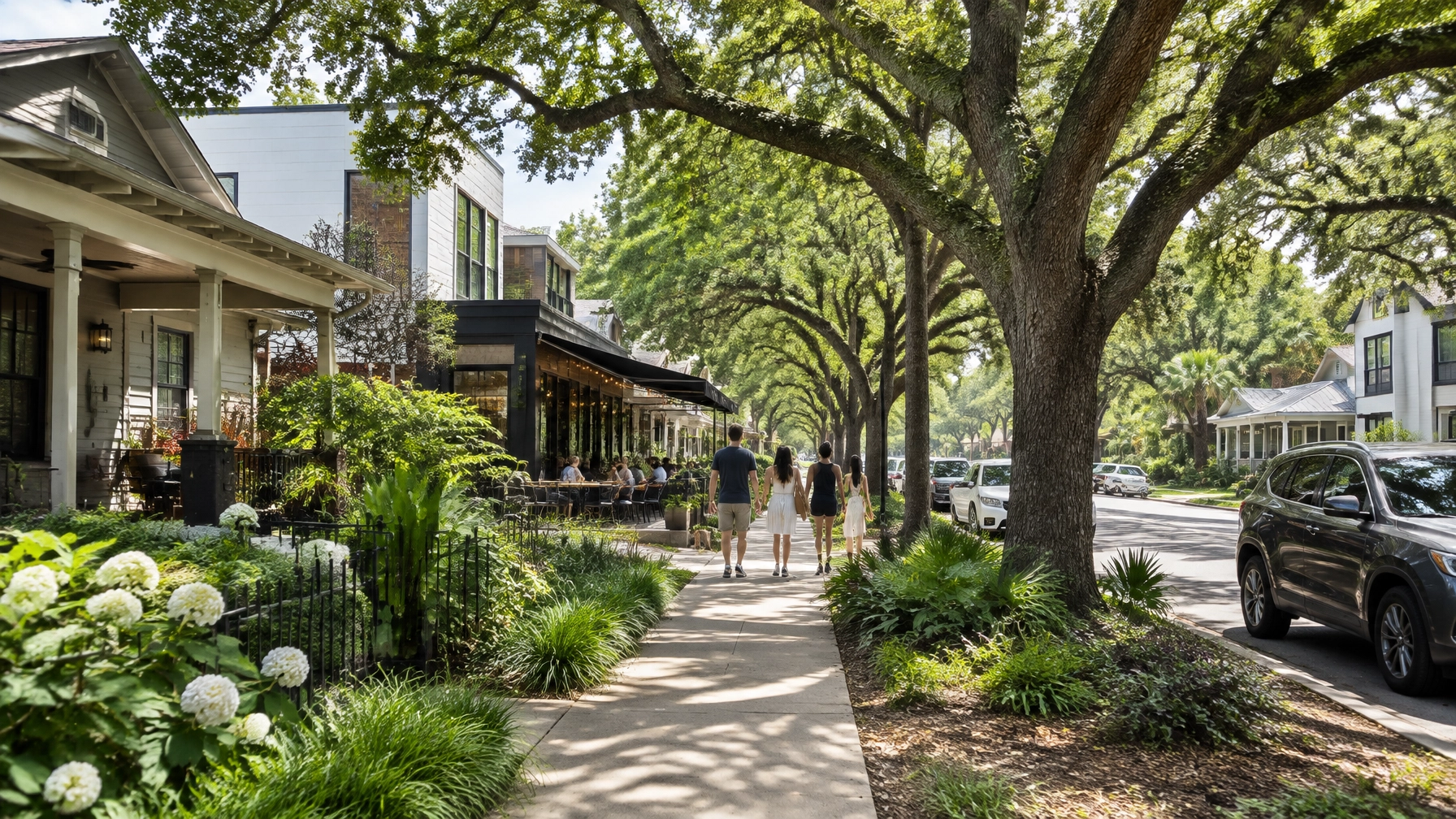
Houston is famous for driving. But you don’t need to drive for every coffee run, dinner, or park visit. In the right neighborhood, walking can be part of your everyday routine.
The key is choosing the right block, not just a familiar neighborhood name. Houston’s walkable areas often sit beside quieter streets where errands still mean a car trip. We’ll help you spot the difference.
What “walkable” really means in Houston
A neighborhood can have great restaurants and still feel hard to navigate on foot. Look for places where daily needs cluster near home, sidewalks connect your route, and crossings feel manageable.
Transit matters, too. Midtown and Montrose rank among Houston’s most walkable areas, according to Walk Score and its Midtown neighborhood data. Both currently show an 86 Walk Score. Midtown’s Transit Score is higher, at 75, compared with Montrose’s 54. These scores describe broad areas, not every address.
Think about your actual week. Can you reach groceries, work, parks, and friends without driving? That matters more than a neighborhood’s reputation.
1. Montrose: restaurants, cafés, and lively streets

Montrose Houston is one of the strongest choices if you want daily life close at hand. Independent restaurants, cafés, bars, shops, and cultural stops cluster along busy corridors. Walk Score reports around 265 restaurants, bars, and coffee shops in Neartown-Montrose, with an average of six within a five-minute walk.
That doesn’t mean every Montrose home sits beside a row of shops. Walkability improves near active stretches and falls off on quieter residential blocks. Check the exact route between a prospective home and your most-used destinations.
You’ll also want to think about noise and parking. Busy nights bring more activity, and curbside spaces can be limited. Some homes and apartments offer dedicated parking; others rely on street parking or paid lots.
Best fit: You want a vibrant neighborhood, a broad dining scene, and errands you can often handle on foot. We’d compare renting and buying based on the exact location, parking setup, and the amount of space you need.
2. Midtown: the best bet for walking plus light rail
Midtown gives you a compact mix of apartments, restaurants, bars, parks, and rail access. Its Walk Score is 86, while its Transit Score is 75. That makes it a compelling pick if you want to drive less without relying only on rideshares.
The Red Line serves Midtown at Ensemble/HCC, McGowen, and Wheeler. From there, you can connect with Downtown, the Museum District, and the Texas Medical Center. Check METRORail’s routes and current schedules before choosing a home based on commute time.
Midtown’s urban convenience comes with tradeoffs. Parking and event traffic can vary by building and block. Before you rent or buy, confirm whether your space is included, reserved, or an added monthly cost.
Best fit: You want dining and transit close by, especially for a commute along the Red Line. If rail access is a priority, check the walking route to your station, not just the distance on a map.
3. The Heights: a walkable village, not a walkable blanket

The Heights Houston has plenty of neighborhood charm, with historic homes, newer townhomes, local shops, and cafés. Its most useful walking hub is around 19th Street, where boutiques and food spots create an appealing destination for a stroll.
The Heights Hike-and-Bike Trail adds another everyday option for walking and cycling. Still, walkability changes a lot from one part of the neighborhood to another. A home near 19th Street or a trail entrance may offer easy outings. A home deeper in a residential pocket may leave you driving for groceries or dinner.
Transit is also less convenient than in Midtown. Think of the Heights as a strong choice for a walkable neighborhood routine, not a guaranteed car-free commute.
Best fit: You value historic character, a local shopping street, and trail access. For a purchase, compare nearby homes by their actual walking routes and parking, not just their Heights address.
4. Rice Military and Washington Avenue: parks first, errands second
Rice Military and the Washington Avenue area make it easier to reach restaurants and nightlife on foot, particularly near the avenue’s busy commercial stretches. The area’s biggest lifestyle draw may be outdoor access.
Memorial Park offers trails, sports facilities, and broad green space. Buffalo Bayou Park is another nearby option for outdoor time. You can review park amenities through the City of Houston’s Memorial Park page.
This is a good fit if weekend walks and park access matter more than rail service. Transit is less straightforward than in Midtown, and some blocks have limited access to everyday shops. Expect to keep a car for many errands, even if you walk to restaurants or trails.
Parking varies by property. Townhomes may offer garages, while visitors and residents can compete for street spaces near busy venues. Check the parking arrangement and your route to the places you’ll visit most.
5. East Downtown (EaDo): rail, stadiums, and an evolving street scene
EaDo puts you near Downtown, sports venues, restaurants, and bars. Some blocks offer an easy walk to an event or dinner. Others still feel more spread out, with fewer everyday shops close by.
The EaDo/Stadium stop connects with the Green and Purple METRORail lines. That makes rail useful for trips toward Downtown and other destinations on those routes. Check the current METRO map and schedules for your likely trips.
Event days change the parking picture. Stadium traffic, crowds, and paid parking can make some streets busy. If you’re buying or renting here, visit during both a regular weekday and an event. That quick check can show you what daily life feels like.
Best fit: You want an urban location close to Downtown, events, and rail. We’d look carefully at the block, construction activity, parking, and nearby everyday services.
6. Museum District and Downtown: smaller, useful walkable pockets
The Museum District offers access to museums, Hermann Park, and the Red Line. It can be a great match if cultural destinations and rail are part of your routine. Walkability still depends on the address and your everyday shopping needs.
Downtown can also work well if your job, dining, and activities are nearby. The rail lines connect at Central Station, with transfers between routes. But Downtown changes character from block to block, and some destinations may feel quieter outside work hours.
These areas suit people who want an urban lifestyle with specific destinations in easy reach. Visit at different times before you commit.
Walkable versus “looks walkable”: a quick checklist
Before you sign a lease or make an offer, test your likely routine:
- Walk the route. Check sidewalks, crossings, shade, and lighting.
- Map the essentials. Find groceries, coffee, parks, and transit from the exact address.
- Test your commute. Ride METRO at the time you’d normally travel.
- Ask about parking. Confirm cost, access, guest options, and event-day restrictions.
- Visit more than once. Try a weekday, evening, and weekend.
- Check the full housing cost. Compare rent or mortgage, HOA fees, utilities, parking, insurance, and taxes.
Renting can help you test a neighborhood before buying. Buying may suit you if you’ve found the right block and expect to stay. In either case, walkability is address-specific. A charming neighborhood name won’t tell you whether your daily errands are convenient.
For a broader look at local areas, see our guides to Houston neighborhoods for homebuyers and Houston neighborhoods for 2026. If you’re moving from out of town, our Houston moving survival guide can help you plan the transition.
Find the right block for your routine
If you want to walk most often, start with Midtown or Montrose. Choose The Heights for a neighborhood shopping hub and trail access. Look to Rice Military for parks, and EaDo for rail and Downtown connections.
We know these neighborhoods offer different tradeoffs. Our team can help you compare streets, housing options, commute routes, and parking before you choose. Start with a free Houston real estate consultation, and we’ll help you find a place that fits the way you want to live.