
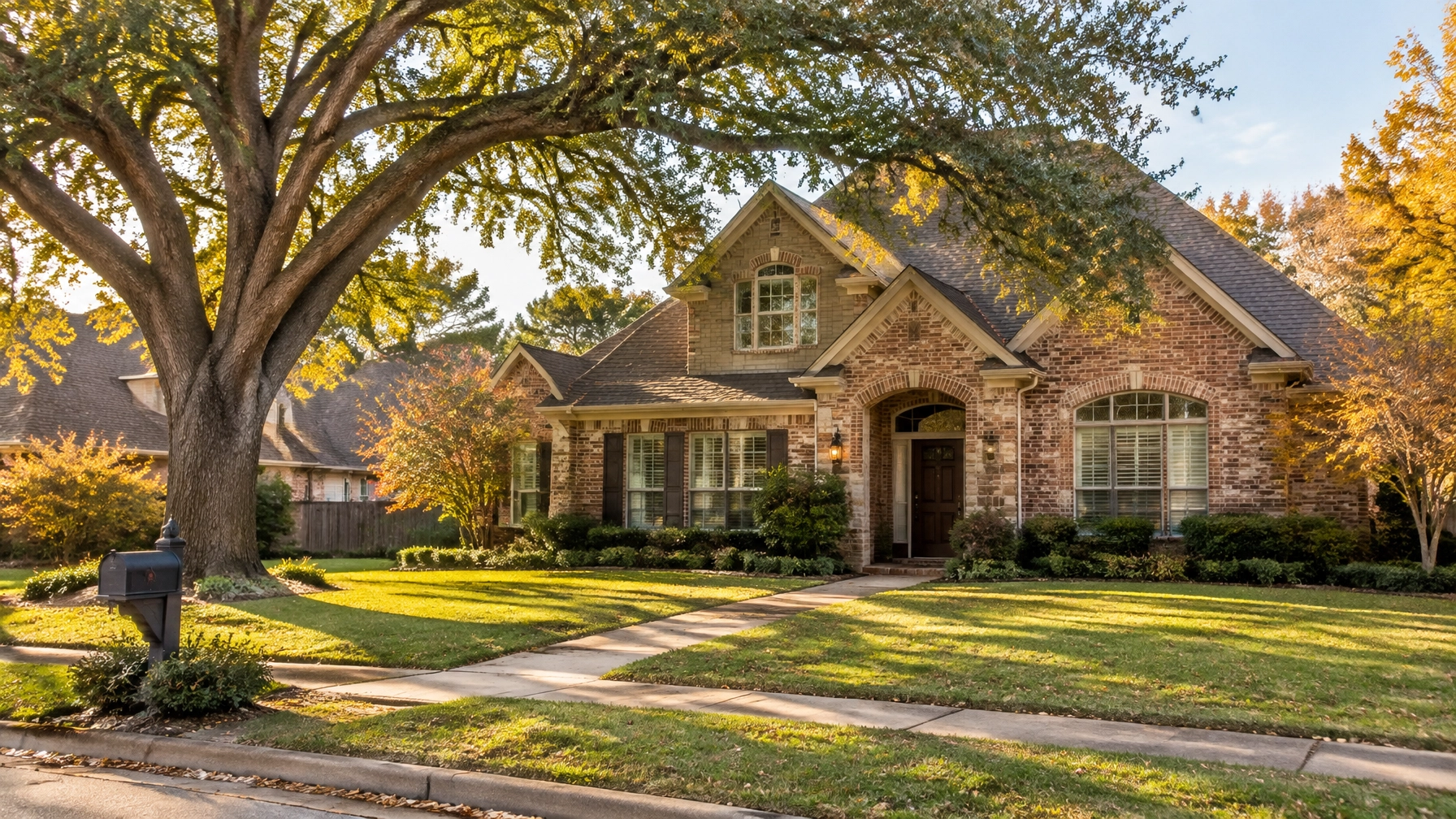
Two homes across Houston can have very different property tax bills. The effective rate ranges from about 1.02% in Pearland to 2.06% in Hockley. That’s a big difference before you even compare home values.
Your 2026 tax bills arrived in October. Payment is due January 31, 2027. That date falls on a Sunday, so check the Harris County Tax Office for its next-business-day payment rule. If you use the split-payment option, the first half is due November 30.
If you’re buying a house in Houston, the tax line can change your monthly budget. If you’re selling, checking your appraisal before listing may uncover a chance to lower it. Here’s what your bill includes, why it varies, and what you can do.
Houston property tax bills vary by address
Approximate 2026 figures show how much rates vary across the metro. These are median effective rates, not a promise of your individual rate or bill.
| Area | Approximate median effective rate |
|---|---|
| Pearland | 1.02% |
| Bellaire | 1.39% |
| Missouri City | 1.42% |
| Houston | 1.44% |
| Cypress | 1.52% |
| Spring | 1.60% |
| Katy | 1.63% |
| Porter | 1.71% |
| Tomball | 1.73% |
| Humble | 1.74% |
| Hockley | 2.06% |
In Harris County, the approximate median effective rate is 1.49%. With a median home value near $275,000, the median bill is about $3,916. Inside Houston city limits, the approximate median rate is 1.44%. The median home value is about $257,337, and the median bill is about $3,485.
Those are broad comparisons, not a quote for a specific property. Your Houston property tax depends on its appraised value, exemptions, and the taxing districts serving its address.

What’s actually in your bill?
Your bill combines taxes from every local taxing unit that applies to your property. That may include:
- Harris County
- Your city
- Your school district, or ISD
- A municipal utility district, or MUD
- Other special districts
Each unit sets its own rate. The amounts appear as separate line items on your bill. For a quick example, the 2026 Harris County rate is about $0.4175 per $100 of value. Katy ISD’s rate is about $1.1171 per $100.
That school district line is often the largest part of the bill. But your total depends on the full combination of districts attached to the address. Two nearby homes can fall into different school districts or MUDs, even when they share a ZIP code.
When you compare homes, check the actual tax breakdown for each property. Don’t rely on a neighborhood average or a monthly payment estimate alone.
MUDs can make a new build’s rate higher
A MUD is a local district that can fund services such as water, sewer, drainage, or other infrastructure. It can also add a separate property tax rate.
Many new homes in growth corridors like Katy, Fulshear, Tomball, and Cypress sit inside MUDs. That’s one reason a new build can carry a higher effective rate than an older neighborhood across the freeway.
Before you commit to a new home, ask for the full combined tax rate. Request the builder’s MUD and tax-rate disclosure. Then confirm which districts apply to the specific lot. A city name or mailing address won’t tell you the whole story.

Two things that can lower your taxable value
Your bill isn’t just about the rate. Your taxable value matters too. Two homeowner benefits are worth checking.
1. The homestead exemption
If the home is your primary residence, you may qualify for a homestead exemption. The school district exemption removes $140,000 from your home’s value for school-tax purposes. Eligible homeowners age 65 or older, or homeowners with a disability, may qualify for another $60,000 school-tax exemption.
The exemption isn’t automatic. Apply through the Harris Central Appraisal District (HCAD). The general deadline is before May 1. You can read more about exemptions through the Texas Comptroller.
Just bought your home? You can generally file after closing. In many cases, you may qualify for part of the year if the seller didn’t claim the exemption. Check with HCAD about your eligibility and timing.
2. The 10% homestead cap
Once your homestead exemption is in place, the value used to calculate taxes generally can’t increase more than 10% per year. That cap can help long-time owners, especially when market values rise quickly.
The cap doesn’t mean every part of your bill is frozen. Taxing units can change rates, and improvements may affect value. The cap also resets when the home changes hands. That’s one reason a longtime owner’s bill may look very different from a new buyer’s bill for the same home.
Buyers: plan for the second-year tax bill
When you’re buying a house in Houston, a mortgage pre-approval won’t always show the property’s future tax bill. Lenders often base escrow estimates on the seller’s current bill. That bill may reflect the seller’s homestead exemption or a capped value.
After a sale, the new owner may not have the same exemption or cap. A purchase price can also influence the next year’s appraisal. Your first full tax bill after buying may therefore be higher than the seller’s bill. If that happens, your lender may adjust your monthly escrow payment.
Budget using the property’s full district breakdown and a realistic taxable value. Don’t assume the current bill will stay the same.
New construction has another wrinkle. A brand-new home may initially be taxed on the land alone, before HCAD records the completed house. That can make the first bill look unusually low. The next bill may include the finished home’s value.
Ask the builder for the property’s actual combined rate and MUD disclosure. Use those details to plan, not the first tax bill.
Sellers: check the appraisal before listing
If you plan to sell, review your HCAD appraisal before your home goes on the market. Check the property details, exemptions, and appraised value. If the value seems too high, consider filing a protest.
A successful protest can lower the appraised value for that tax year. That may help inform a buyer’s estimate. But a sale can lead to a new appraisal, so don’t promise that a lower current value will determine the buyer’s future bill.
Want help preparing for your move? A local Houston real estate agent can help you understand how taxes fit into a home’s overall affordability. We can also help you gather the right property details before you list.
How to protest your appraisal
You can protest an HCAD appraised value. The general deadline is May 15 or 30 days after HCAD mails your notice of appraised value, whichever is later. There’s no filing fee. The Harris County Tax Office FAQ explains where to file, and protests go through HCAD.
A tax bill arriving in October isn’t the appraisal notice. If you want to challenge a value, watch for the appraisal notice and its deadline. Most protests settle in an informal meeting rather than going to a hearing.
Useful evidence can include recent comparable sales and clear records of property condition. Keep the focus on whether HCAD’s appraised value is accurate. Check HCAD’s current instructions before filing.

Keep your bill in view
The harris county property tax line is only one piece of your total. Your school district, city, MUD, exemptions, and appraised value all matter. Check the complete tax breakdown before you buy. Review your appraisal and exemption status before you sell.
We’re happy to help you make sense of the numbers. Contact our Houston team for a free consultation about your next home purchase or sale.