
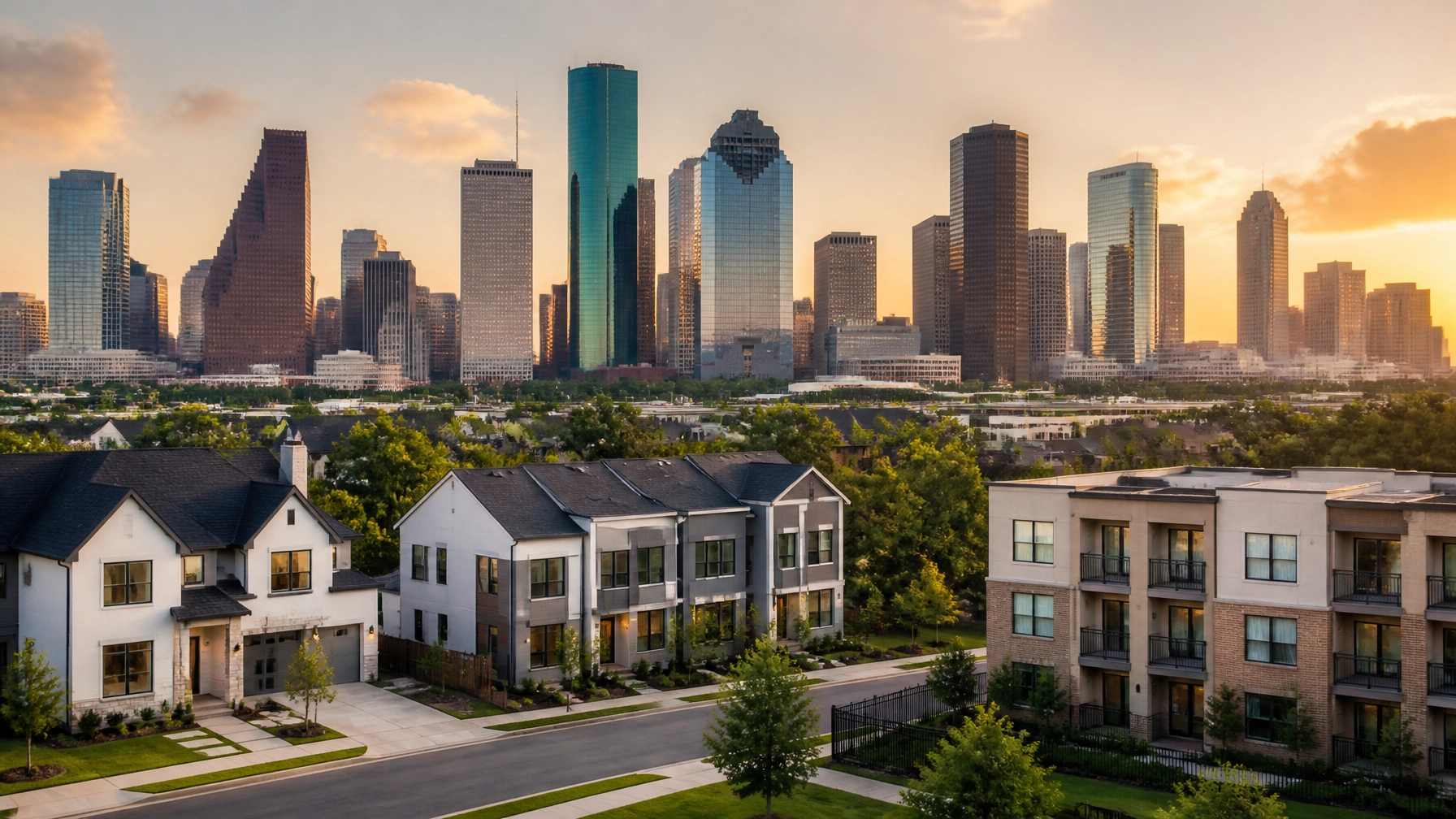
Houston still gives investors something many major markets don’t.
You can find real cash flow, reasonable entry prices, and long-term growth. You just need to choose the right neighborhood for your strategy.
Some Houston areas favor monthly income. Others favor appreciation and stability. The best choice depends on your budget, timeline, management comfort, and risk tolerance.
We’ll break down the strongest Houston real estate investing opportunities for 2026.
Houston investing in 2026: cash flow requires discipline
Houston’s market has become more balanced. Buyers have more choices. Sellers have less pricing power. That creates room for investors who underwrite carefully.
We’re seeing:
- Stable rental demand across many submarkets
- Moderate rent growth instead of rapid spikes
- More negotiating power on investment properties
- Wider cap rates than many coastal markets
- Strong demand from healthcare, energy, logistics, and technology workers
That last point matters. Houston’s diverse job base supports different tenant pools across the metro.
Still, you can’t rely on appreciation alone. Your deal needs to work today.

High cash-flow zones: Northeast Houston, Sunnyside, and South Park
If your first goal is monthly income, start with Houston’s deepest value pockets.
Northeast Houston
Northeast Houston can offer some of the lowest entry prices in the metro. Older homes, small multifamily properties, and value-add opportunities attract investors seeking higher yields.
Indicative cap rates often land around 8% to 10.5%. That range reflects the area’s lower acquisition costs and stronger income potential.
You’ll need to budget carefully for:
- Property condition
- Tenant screening
- Repairs and deferred maintenance
- Block-by-block differences
- Insurance and flood exposure
This area rewards active investors. It may not offer the simplest ownership experience.
Sunnyside
Sunnyside remains a value-driven investment market. Investors often target affordable single-family homes and small rental properties.
Indicative cap rates can reach 8% to 10.5% with the right purchase price and renovation plan.
The biggest opportunity often comes from improving older housing stock. You may increase rents through practical upgrades, better layouts, and stronger property management.
We recommend walking every target block. Houston can change significantly within a few streets.
South Park
South Park offers another lower-cost entry point. It can work well for investors targeting workforce housing and affordable rentals.
Expect potential cap rates around 8% to 10.5%. Strong returns require realistic rent assumptions and disciplined expense control.
You should also stress-test vacancy and repairs. Higher nominal returns usually come with higher operating risk.
Balanced upside: Third Ward and Spring Branch
These neighborhoods can give you more than one path to returns.
Third Ward
Third Ward combines central access, university demand, light-rail connectivity, and ongoing infill development.
Indicative cap rates generally range from 6.5% to 9%. Older homes can offer value-add potential. Smaller multifamily properties may benefit from nearby student and professional demand.
Third Ward works best when you understand the exact tenant pool. A property near transit or academic institutions may perform differently from one several blocks away.
You’ll also want to compare renovation costs against the neighborhood’s achievable rents. New construction competition can affect your upside.
Spring Branch
Spring Branch gives investors a value-add corridor near major employment centers, including the Energy Corridor.
Indicative cap rates typically fall around 6.5% to 8.5%. You can find older ranch homes, townhomes, and redevelopment opportunities across the area.
We like Spring Branch for investors who want:
- Better tenant demand than many deep-value zones
- More manageable entry prices than premium Inner Loop areas
- Renovation and infill potential
- Access to major employers and transportation routes
Spring Branch can bridge the gap between cash flow and appreciation.
Appreciation plays: The Heights and Montrose
Inner Loop neighborhoods usually require a different mindset.
The Heights
The Heights attracts renters who value walkability, dining, character, and central access. Demand remains strong for well-located homes, townhomes, and small multifamily properties.
However, acquisition prices compress returns. Indicative cap rates often fall around 4% to 6%.
This is usually an appreciation and stability play. You may accept less cash flow today for stronger long-term desirability.
Montrose
Montrose offers similar advantages. Tenants often pay for location, lifestyle, and proximity to employment centers.
You’ll likely see higher rents and lower turnover in well-positioned properties. You’ll also face higher purchase prices and tighter margins.
Focus on quality, durable finishes, and realistic operating costs. A strong location cannot rescue a poorly renovated property.
Stable suburban rentals: Katy and Sugar Land
Master-planned suburbs can fit investors who prioritize predictable family demand.

Katy
Katy benefits from schools, newer housing, and strong family rental demand. Turnover can be lower when you buy near the right schools and amenities.
Indicative cap rates often land around 5% to 6%. Your returns may improve through builder incentives, a discount, or light value-add work.
Don’t assume aggressive rent growth. Underwrite today’s rent and verify competing new construction.
Sugar Land
Sugar Land offers higher-income tenants, established neighborhoods, and strong long-term appeal.
Returns often resemble Katy, with indicative cap rates around 5% to 6%. You may gain tenant quality and stability, but you’ll usually pay more for the asset.
These suburbs make sense for investors seeking lower operational intensity. They may not maximize cash flow.
2026 underwriting realities for Houston investment properties
Your numbers must reflect Texas expenses.
Property taxes can run roughly 2.0% to 2.8% effective, depending on the property’s taxing jurisdictions and assessed value. Always verify the specific property through the relevant appraisal district and Harris County Tax Office rate information.
We recommend these starting assumptions:
- Hold 25% to 35% of gross income for operating expenses and reserves
- Target roughly 0.7% to 0.9% of purchase price in monthly rent
- Treat the 1% rule as uncommon without value-add work
- Model insurance, vacancy, repairs, management, taxes, and capital expenses
- Stress-test higher taxes, insurance premiums, and slower leasing
Your deal should still work after conservative assumptions.

How Hou.co helps you invest with more confidence
We combine residential and commercial real estate expertise across Houston. That gives you a broader view of neighborhoods, property types, and exit strategies.
Our team can help you:
- Compare cash-flow and appreciation neighborhoods
- Find residential and commercial opportunities
- Review rent and sales comparisons
- Identify value-add potential
- Connect with our investor and transaction network
- Plan purchases, sales, and future exchanges
You can also read our complete Houston real estate investing guide before building your shortlist.
Ready to compare Houston investment properties? Contact Hou.co for a free consultation. We’ll help you match your budget and goals with the right Houston strategy.